How virtual care helps emergency services reduce ramping and unnecessary call-outs

Virtual care reduces ambulance ramping by keeping patients who don’t need an emergency department out of one. When paramedics and aged care nurses can connect a patient to an emergency doctor by video, with live vital signs and clinical-grade examination data, more patients are treated where they are, fewer are conveyed, and crews get back on the road sooner.
Australian ambulance services are already proving the model through virtual emergency departments (VEDs) and emergency specialist services. What separates a useful virtual consult from a limited one is what the remote doctor can actually see, hear and measure. That’s where the technology matters.
What is ambulance ramping?
Ambulance ramping happens when paramedics can’t hand a patient over to emergency department staff because the ED is at capacity. The patient stays in the crew’s care, often in the ambulance or a hospital corridor, and that crew can’t respond to the next call.
Ramping is a symptom, not the cause. AMA President Dr Danielle McMullen has described it as a whole-of-system problem rather than an ambulance or ED problem. Reducing it means easing pressure at every point where a patient might end up on a stretcher outside the ED, including the front door.
How bad is ambulance ramping in Australia?
Demand and delays are at or near record levels:
- Record national demand. The AMA Ambulance Ramping Report Card 2026 found more than 2.4 million people arrived at Australian EDs by ambulance in 2024-25, and call-outs reached a record high.
- South Australia. According to AMA SA, patients spent 48,466 hours ramped in 2025 to the end of November, already a record with a month to go.
- Western Australia. AMA WA reports that St John WA recorded three consecutive record months in 2025, peaking at 7,274 ramped hours in September.
- Fewer on-time handovers. The AMA Ambulance Ramping Report Card 2025 found the share of patients transferred on time has fallen sharply across states since 2019-20.
New beds and hospitals take time to build, and health services everywhere are working hard to attract and retain clinicians.
The World Health Organization projects a global shortfall of 11 million health workers by 2030, and recruiting to small rural communities remains a challenge. Virtual care complements these efforts by bringing emergency expertise to the patient, giving ambulance services another way to reduce avoidable conveyances now.
How does virtual care help paramedics triage patients in the field?
Virtual care can give paramedics a second clinical opinion at the point of care. When a crew assesses a patient as low acuity, they can connect them by video to an emergency clinician who assesses, treats and arranges local follow-up. The patient stays in their home or their residential aged care facility, and the crew is free for the next call.
This is a hub and spoke model of emergency care. At the spoke is a skilled clinician with the patient: a paramedic on scene, a nurse in a rural ED or an aged care nurse at the bedside. At the hub is an experienced emergency doctor. Together they assess, treat and escalate quickly when a patient needs to move.
Victoria shows what this looks like at scale. Ambulance Victoria crews refer patients statewide to the Victorian Virtual Emergency Department (VED), run by Northern Health:
- The Victorian Government reported that during the original pilot, 87% of people referred to the virtual service avoided an ambulance trip to ED.
- Research by Ambulance Victoria, Monash University and the VED found 30,433 ambulance presentations were referred between October 2021 and May 2023, and almost three-quarters of those patients were not transported to hospital.
- The Victorian Ambulance Union says some paramedics now use the service up to five times a shift.
The time saving is significant. A 2025 study in the Emergency Medicine Journal found ambulance cases ending in a GP referral had a median cycle time of 40 minutes, compared with 120 minutes for cases conveyed to ED. Every avoided conveyance is time a crew isn’t spending on the ramp.
Why does the quality of a virtual assessment matter?
Video connects the patient and doctor, but emergency decisions often need more. With video alone, a remote doctor can’t listen to a chest, read a 12-lead ECG or look inside an ear canal. When the clinical picture is incomplete, transport is the safe choice. Richer clinical data gives the doctor the confidence to treat in place when that’s the right call.
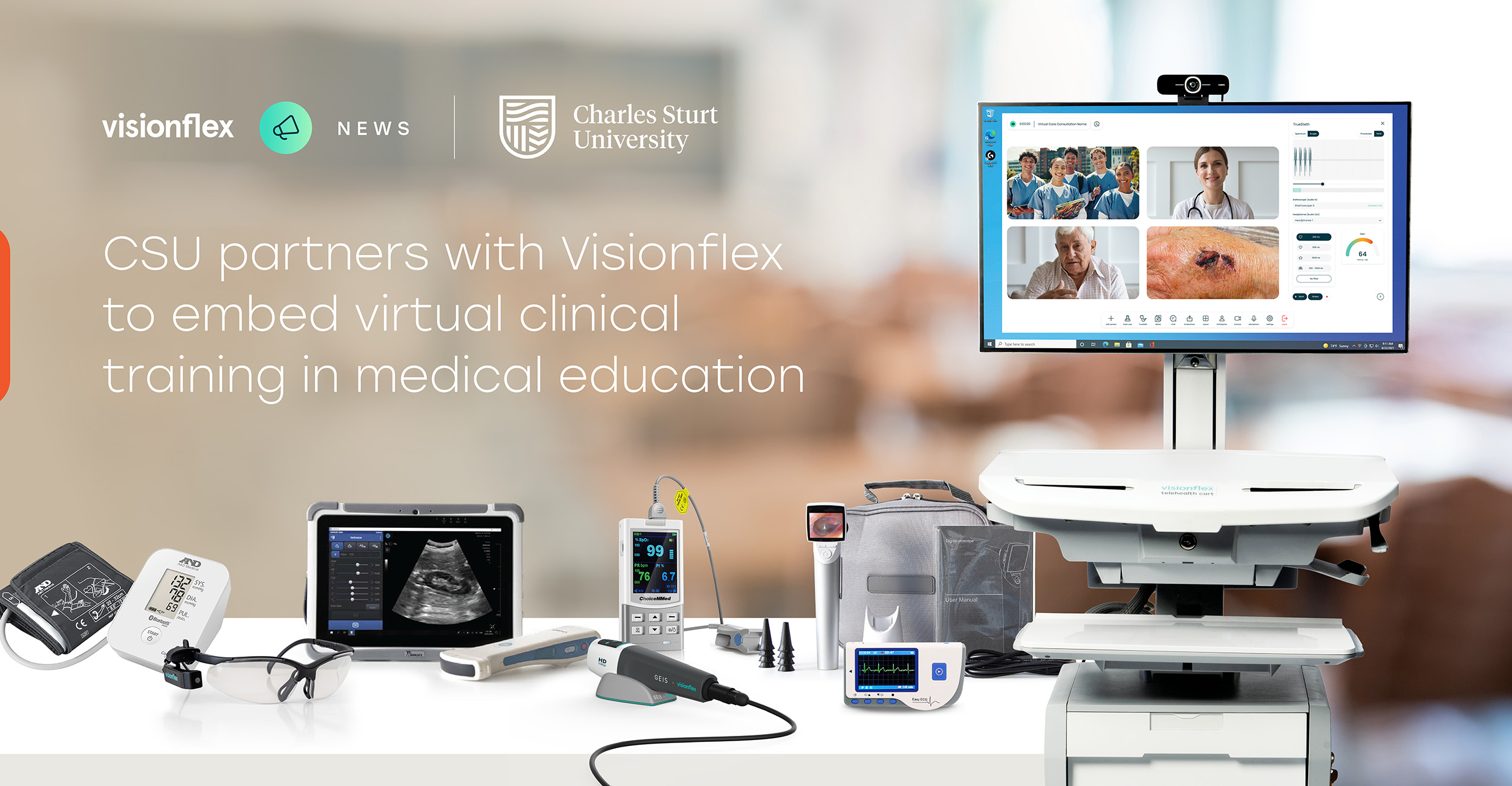
The Visionflex Platform is built around clinical-grade examination, not just video. During a consult, live data from integrated medical devices streams straight to the remote clinician:
- GEIS® examination camera for detailed images of wounds, skin, eyes, ears and throat
- Pan-tilt-zoom camera the remote doctor controls themselves
- Digital stethoscope for heart and lung sounds
- ECG, pulse oximeter, blood pressure, thermometer and blood glucose readings in real time
- Ultrasound where the setting calls for it
The Royal Flying Doctor Service (RFDS) uses the Visionflex Platform in outback South Australia. Its medical officers have said their doctors can “instantly get three or four pieces of diagnostic information”, and that this can decide whether an emergency flight is coordinated or the patient is managed locally. The same logic applies to an ambulance dispatch.
The same model is supporting rural hospitals. In Western NSW, the Virtual Rural Generalist Service (VRGS) supports more than 30 rural hospitals and multipurpose services across a quarter of a million square kilometres. VRGS doctors work alongside local nurses to deliver emergency care and overnight escalations, backed by virtual diagnostic carts at the bedside. Independent evaluations published in the Medical Journal of Australia found the service complements and enhances medical care where local services are limited, and clinicians reported it fills medical service gaps.
“Having an experienced doctor in your ear, seeing the exact clinical data you’re seeing, changes everything.”
– Ben Chiarella, Visionflex Director of Clinical Innovation, Registered Nurse and former VRGS Operations Manager
How do RACHs, virtual EDs and My Emergency Doctor work together to avoid call-outs?
Residential aged care homes (RACHs) are a major source of ambulance call-outs, and many are avoidable. The Australasian College for Emergency Medicine estimates 13 to 40% of transfers from aged care to ED are potentially avoidable with quality clinical care in the facility. Falls, wound management, medication errors and palliative care are among the key contributors.
Virtual care lets a RACH resolve these situations before anyone dials triple zero. A typical pathway looks like this:
- A resident deteriorates. A nurse brings a Visionflex Virtual Care Cart to the resident’s room, or brings the resident to a room with a Virtual Care Cabinet installed.
- The nurse connects to an emergency specialist. That might be a state VED or My Emergency Doctor, a 24/7 service staffed by specialist emergency physicians (FACEMs) that works with ambulance services, hospitals and aged care providers.
- The specialist examines the resident remotely, with live vital signs, images from a GEIS exam camera, heart and lung sounds and ECG in front of them.
- The specialist decides the next step: treat in place, arrange GP or in-reach follow-up, or escalate to an ambulance with a clear clinical picture already established.
The evidence supports this approach. In a 2025 study of 260 aged care residents who had fallen and hit their head, only 24.2% were transferred to hospital after a VED assessment. Visionflex customers are seeing the same effect: some RACHs using the Visionflex Platform report avoiding six unnecessary ambulance call-outs since implementation.
For ambulance services, that means fewer low-acuity call-outs from aged care, and when a call does come in, a doctor has already confirmed it’s needed.
How does virtual care support crews on the road and in remote areas?
The Visionflex Mobile Kit packs the same clinical capability into a portable kit, so crews can connect a patient to a VED or clinical hub from the scene or the vehicle.
BHP uses a Visionflex Mobile solution on its rescue helicopter in Western Australia, so flight paramedics can start advanced care enroute while a doctor on the ground guides them by video. In outback South Australia, RFDS runs a 24/7 Virtual Emergency Care Centre at William Creek, where people can connect directly to an emergency doctor at any hour, even with no clinician on site.
What should ambulance services look for in a virtual care platform?
A virtual care platform for emergency triage should offer:
- Clinical-grade devices, not just video. Remote clinicians need the data to make a confident non-conveyance decision.
- One platform across settings. The same system in the vehicle, the aged care home and the remote clinic means consistent workflows and training.
- Flexibility on who answers. Connect to a state VED, My Emergency Doctor or your own clinical hub.
- Interoperability. HL7 and FHIR support for integration with existing EMR and EHR systems.
- Security and compliance. The Visionflex Platform is certified to ISO 27001:2022, operates under ISO 13485, uses TGA-registered devices, encrypts data at rest and in transit, and is penetration tested annually.
- Training and support. Onsite train-the-trainer sessions, culturally competent training for First Nations and CALD communities, and ongoing technical support.
- Proven at scale. Amplar Health, Visionflex’s largest user, along with WA Primary Health Alliance (180 facilities), Northern Queensland PHN (36 aged care homes), RFDS and BHP.
Talk to us about virtual care for your ambulance service
Visionflex works with ambulance services, aged care providers and health networks to design virtual care pathways that keep patients out of emergency departments when they don’t need to be there.