The pieces already exist: inside the push to close Australia’s rural health gap.
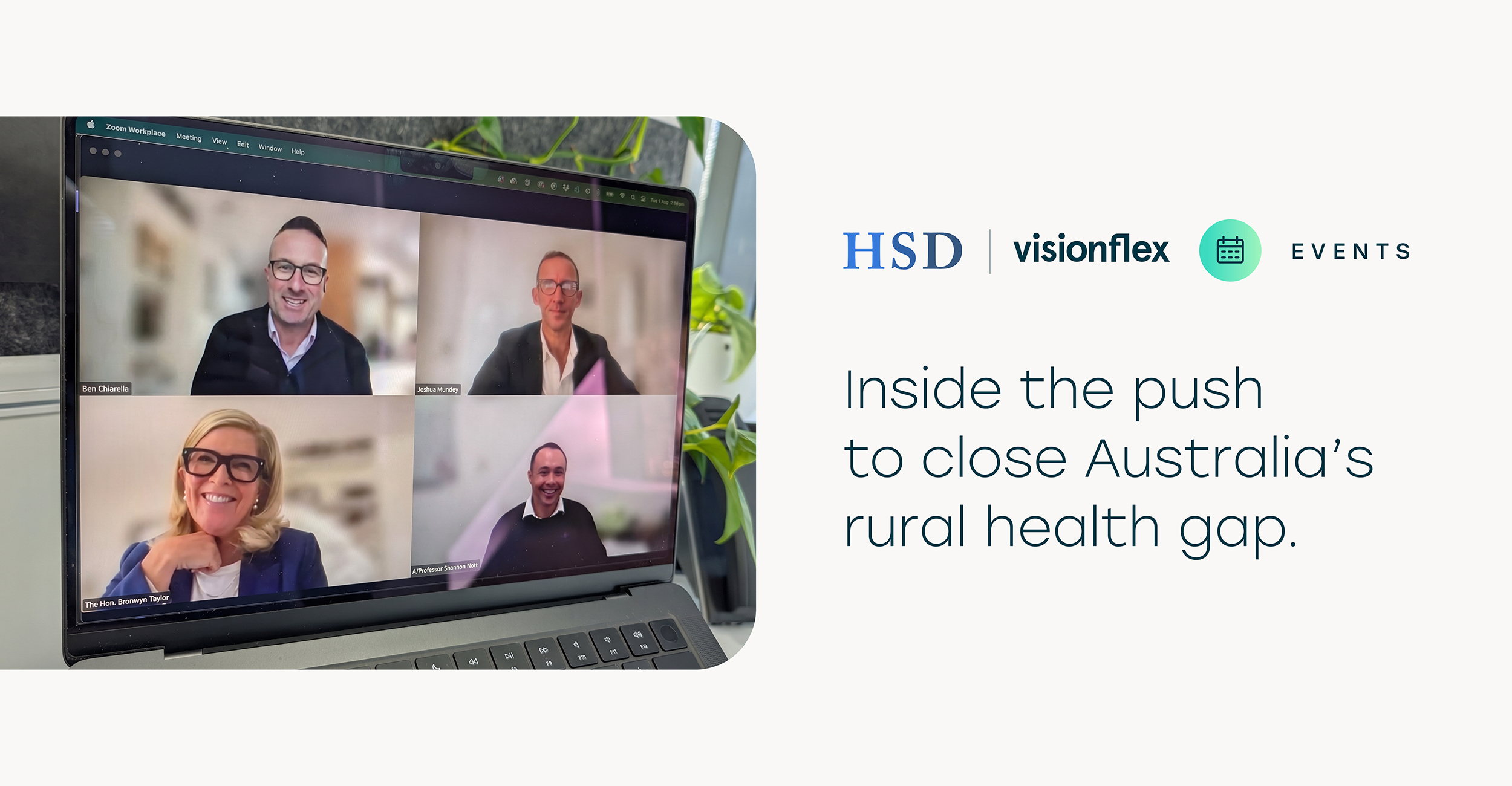
In partnership with Health Services Daily, Visionflex brought together over 580 thought-leaders from across Australia to explore the challenges and opportunities available to address the equity gap for rural and remote Australians.
A/Prof Shannon Nott, The Hon. Bronnie Taylor and Ben Chiarella in conversation with Joshua Mundey examined the workforce, system and geographical challenges impacting rural communities, alongside the emerging models of care, technology and partnerships helping to deliver more connected, sustainable and equitable healthcare.
Here’s what stood out.
Virtual care can close the gap but design is critical
One myth worth challenging is the idea that virtual care is a single lever you either pull or don’t. Build a service that assumes, and you can add to the access gap for exactly the communities you’re trying to help.
It’s a risk A/Professor Shannon Nott has seen first-hand:
“You can inadvertently, through digital access challenges that exist in rural and remote environments, add to the access gap. What about those people that can’t afford devices, what about those people who don’t have reliable broadband…”
The way through is designing virtual and hybrid models around the evidence of what works, not around where the technology happens to be centralised. An example shared in the webinar was a virtual clinical pharmacy service that brought big-hospital-grade medication safety checks to rural bedsides that had never had them. Care was extended outward, not just centralised inward.
The best virtual models don’t replace the local GP or nurse, they buy them a weekend off and extend how long they stay.
“There are 330 towns in Australia with a pharmacy and no GP” -The Hon. Bronnie Taylor
The panel challenged an interesting idea. Scope of practice is ultimately about the standard of care delivered, not protecting a degree.
If a pharmacist, nurse practitioner or physiotherapist can deliver care safely, within appropriate governance, at the same standard as any other clinician, the primary question should be whether the patient is well served.
“We have all the pieces to create a solution right now for those towns. That’s the most frustrating thing, we don’t have the funding mechanisms yet, but we have the pieces to actually put together collaborative models of care.” – Ben Chiarella
The cost of losing a seat at the table
Asked about the scrapping of NSW’s dedicated Regional Health portfolio, The Hon. Bronnie Taylor said:
“We lost visibility. When you haven’t got someone around the cabinet table that is constantly thinking about their portfolio and what needs to happen, you lose that traction.”
Without someone at the cabinet table focused and advocating, rural health loses out to competing priorities and a shrinking budget.
Health spending in regional areas isn’t just a health investment. It helps keep towns viable places to live, work and raise families.
Communities weren’t struggling simply because of the distances involved. Without access to healthcare, it could be unsafe to live in them. A century on, that reality hasn’t disappeared.
Funding that follows outcomes, not geography
“We finance toll roads. We finance social housing. The operator earns a return for hitting verified outcomes. Why not rural health? A shared funding pool that pays for quantified, verified outcomes.” – Joshua Mundey
The idea is simple: bring funding together around a shared goal, measure the outcomes, and share the risk and reward of delivering better care.
The challenge is finding funding models that give states, providers and communities more flexibility to deliver care in the way that works best locally.
For rural and regional communities, the panel agreed that funding should follow the outcomes we want to achieve, not simply where care is delivered.
The Closing Challenge
When asked to name one move that could help close the gap by 2030, each had a different take. Watch from 53:45 in the webinar to hear their full responses.
Watch the full webinar on-demand here.
If you work across rural and remote healthcare, we want to hear your views on the challenges, opportunities and models that could help close the equity gap. It takes 5 minutes and goes straight into shaping where Visionflex focuses next.
The Visionflex teams helps build the kind of hybrid models of care discussed int his panel. With obligation-free discovery calls and product demonstrations available, embedding a class-leading virtual care solution into your healthcare program has never been simpler or easier to access.
Get in touch with the Visionflex team to learn more about how we support remote and rural healthcare.
Meet the speakers

The Hon. Bronnie Taylor
Non Executive Director, Pharmaceutical Society of Australia and Former Minister for Women, Regional Health and Mental Health, Government of NSW
Bronnie Taylor is a board director, executive advisor, and former Senior Government Cabinet Minister, the first ever Minister for Regional Health in NSW, combining clinical healthcare expertise, regional insight, and national leadership experience. In government, she helped shape responses to natural disasters and COVID-19, and led reforms such as the pharmacy extended scope of practice, a $16.5 billion women’s economic package and the expansion of women’s health services. Today, she serves on national boards and provides advice on women’s health, regional development, and ethical leadership, focused on helping organisations create lasting community impact.

A/Professor Shannon Nott
Chief Medical Officer, Royal Flying Doctors Service of Australia
A/Professor Shannon Nott is Executive General Manager Health & Clinical Services and Chief Medical Officer at the Royal Flying Doctor Service South Eastern Section. A rural generalist by training, Shannon brings extensive experience delivering healthcare in regional and remote communities and is passionate about improving access to care for people regardless of where they live. Through his leadership with the RFDS, he continues to champion innovative models of care that combine clinical expertise, technology and community-based approaches to support better health outcomes across rural Australia

Ben Chiarella
Registered Nurse, and Director of Clinical Innovation, Visionflex
Ben Chiarella is a Registered Nurse and Clinical Director of Innovation at Visionflex, where he focuses on how technology can support better healthcare delivery. With a background in frontline nursing, Ben brings a practical clinical perspective to the role of virtual care and digital health in improving access, supporting clinicians and connecting patients with care wherever they are.